Skip to content
IPTV Encoder Box: Complete Setup & Configuration Guide
Introduction
Broadcasting quality content in today’s digital streaming landscape presents significant challenges for both individuals and businesses. Poor video quality, compatibility issues, and complicated setup processes often frustrate those attempting to share their content with viewers. An IPTV encoder box solves these problems by converting traditional video signals into digital streams suitable for Internet Protocol Television (IPTV) distribution. This specialized hardware has become essential for anyone serious about delivering professional-grade streaming content across multiple platforms.
When setting up your streaming infrastructure, it’s always wise to thoroughly test your IPTV service before making a long-term commitment to ensure it meets your specific requirements. Try a free IPTV trial to experience quality streaming performance firsthand.
What Is An IPTV Encoder Box?
An IPTV encoder box is specialized hardware designed to convert traditional audio and video signals (like HDMI, SDI, or analog inputs) into compressed digital formats suitable for transmission over IP networks. This conversion process, known as encoding, transforms raw video and audio content into streaming-friendly formats like H.264, H.265 (HEVC), or MPEG-4, allowing for efficient distribution across the internet.
The core function of an IPTV encoder box is to digitize, compress, and package media content for delivery via internet protocols. Unlike standard media players that only decode and display content, encoder boxes perform the opposite function—preparing content for distribution to viewers’ devices. Many modern streaming platforms and devices depend on properly encoded content for optimal performance. Authority streaming reference services like Amazon Fire TV have popularized streaming, increasing demand for quality encoding solutions.
IPTV encoder boxes range from single-channel consumer devices to professional multi-channel systems capable of simultaneously processing multiple input sources. They typically include encoding hardware, processing units, network interfaces, and management software to control the encoding parameters and output settings.
Why Users Search For This
Users search for IPTV encoder box solutions for several compelling reasons related to content distribution needs:
1. Content Creation Professionals: Video producers, broadcasters, and content creators need reliable ways to distribute their material to audiences across various platforms and devices.
2. Business Communication: Companies increasingly use video streaming for internal communications, training, and customer engagement, requiring encoding solutions to deliver this content efficiently.
3. Religious Organizations and Educational Institutions: Churches, schools, and universities often seek encoding solutions to stream services, lectures, and events to remote audiences.
4. Live Event Streaming: Sports venues, concert halls, and event spaces need encoding hardware to broadcast live experiences to viewers who cannot attend in person.
5. Security and Surveillance: Businesses utilizing IP camera systems often need encoding technology to efficiently process and distribute security footage.
The rising popularity of Trusted industry source platforms has created increased demand for quality encoding solutions as more content creators transition from traditional broadcasting to internet-based distribution models.
Key Information & How IPTV Encoder Boxes Work
IPTV encoder boxes operate through a sophisticated process that transforms raw video signals into streaming-ready content:
1. Signal Capture: The encoder receives video and audio input from sources like cameras, media players, or broadcast feeds.
2. Encoding/Compression: The device processes these signals using specialized hardware to compress them into efficient streaming formats while maintaining quality.
3. Packetization: Compressed content is divided into data packets for transmission over IP networks.
4. Streaming Protocol Implementation: The encoder applies protocols like RTMP, HLS, or MPEG-DASH to make the content deliverable across the internet.
5. Network Distribution: The encoded content is transmitted through network interfaces to content delivery networks, streaming servers, or directly to viewers.
IPTV Encoder Box Comparison
| Feature | Entry-Level Encoders | Mid-Range Encoders | Professional Encoders | |———|———————-|——————–|———————–| | Channels | 1-2 inputs | 2-4 inputs | 4+ inputs | | Resolution | Up to 1080p | Up to 4K | Up to 4K/8K | | Bitrate | 1-8 Mbps | 5-15 Mbps | 10-50+ Mbps | | Protocols | Basic (RTMP) | Multiple (RTMP, HLS) | Comprehensive (RTMP, HLS, MPEG-DASH, SRT) | | Latency | High (5-10s) | Medium (2-5s) | Low (0.5-2s) | | Price Range | $200-$600 | $600-$2,000 | $2,000-$10,000+ | | Use Case | Personal streaming | Small business | Professional broadcasting |
The quality of your IPTV encoder box directly impacts viewer experience, with professional models offering better image quality, lower latency, and more reliable performance than consumer-grade alternatives.
Setup & Preparation
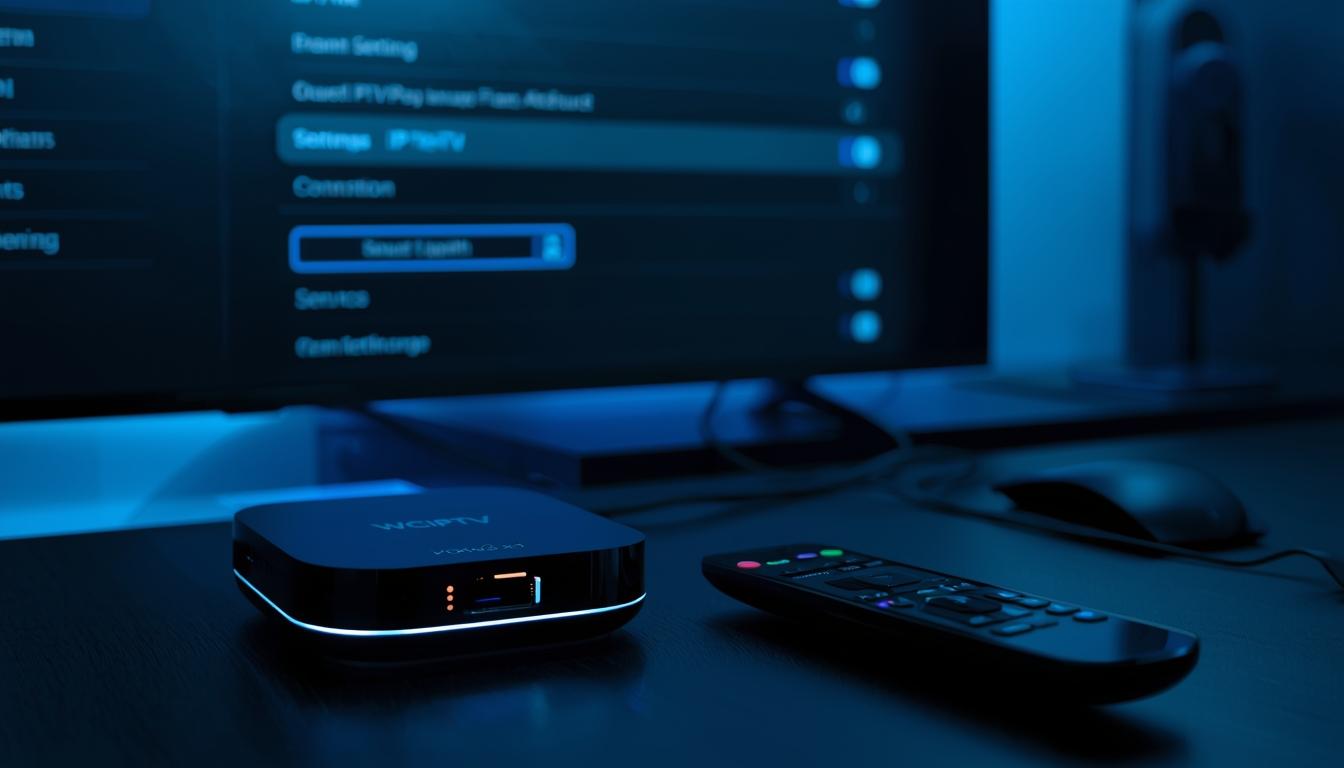
Preparing your IPTV encoder box requires careful planning and assessment of your specific needs. Before powering up your device, consider the following preparation steps:
1. Network Assessment: Ensure your internet connection has sufficient upload bandwidth—ideally 1.5× your intended streaming bitrate. For professional streaming, a dedicated internet line is recommended.
2. Equipment Inventory: Gather all necessary components including the encoder box, power supplies, video source devices, cables (HDMI, SDI, Ethernet), and a monitor for configuration.
3. Environment Preparation: Install your encoder in a well-ventilated area with stable power. Professional setups should consider rack mounting and uninterruptible power supplies.
4. Service Planning: Determine your streaming destination (YouTube, custom server, CDN) and obtain any necessary streaming credentials before configuration.
The setup time varies based on complexity, but allocate approximately: – Basic setup: 30-60 minutes – Advanced configuration: 2-3 hours – Professional multi-channel system: 4-8 hours
Proper preparation significantly reduces troubleshooting time and ensures a smoother streaming experience once your encoder is operational.
WCIPTV Context
When setting up an IPTV encoder box, having a reliable IPTV service to test your streams becomes essential. WCIPTV provides a flexible IPTV solution that works seamlessly with properly encoded content across multiple devices and platforms. The stability of WCIPTV’s infrastructure makes it an excellent testing environment for content creators and broadcasters setting up new encoding systems.
One significant advantage of WCIPTV is its broad device compatibility, allowing encoded content to be viewed on smart TVs, mobile devices, dedicated IPTV boxes, and computer systems. This makes it an ideal platform for content creators who need to ensure their encoded streams display correctly across diverse viewing environments.
Before investing heavily in encoding infrastructure or committing to specific encoding parameters, testing with a reliable IPTV service can provide valuable insights into how your content performs in real-world conditions. This testing phase helps optimize encoding settings for the best balance of quality and bandwidth efficiency.
Step-by-Step Instructions
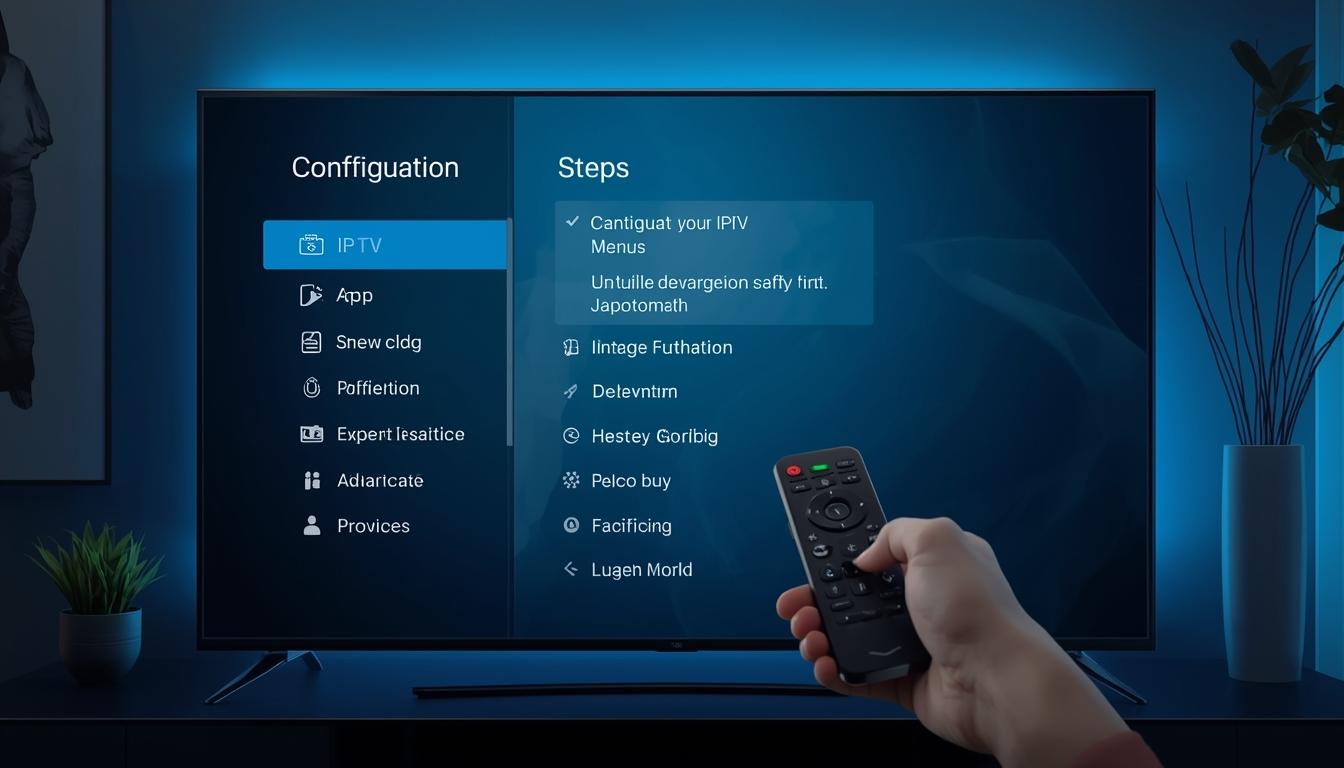
Setting up an IPTV encoder box requires attention to detail. Follow these comprehensive steps for a successful implementation:
1. Physical Installation – Mount the encoder box in your designated location – Connect power using the supplied adapter – Ensure proper ventilation around the device
2. Connect Video Sources – Attach your video source (camera, media player, etc.) to the appropriate input (HDMI, SDI, etc.) – Secure cables with strain relief when possible to prevent accidental disconnection
3. Network Connection – Connect the encoder to your network using an Ethernet cable – For wireless models, configure WiFi settings through the device interface
4. Initial Configuration – Access the encoder’s web interface using the default IP address (typically found in the manual) – Change default login credentials to secure your device – Set a static IP address for the encoder if operating in a professional environment
5. Video Encoding Setup – Select the appropriate input source – Configure encoding parameters: – Resolution (720p, 1080p, 4K) – Frame rate (24, 30, 60 fps) – Bitrate (2-10 Mbps for HD, higher for 4K) – Encoding profile (baseline, main, or high)
6. Audio Configuration – Set audio source (embedded or dedicated input) – Configure audio codec (AAC is recommended) – Adjust audio bitrate (128-256 kbps typically sufficient)
7. Stream Destination Setup – Configure streaming protocol (RTMP, HLS, etc.) – Enter destination server information (URL/IP, stream key, credentials) – For multiple destinations, configure each output stream separately
8. Test Stream – Initiate a test stream and verify: – Video and audio quality – Stream stability – Latency characteristics – Use a stream analyzer tool to check for packet loss or frame drops
9. Fine-Tuning – Adjust bitrates based on test results – Optimize for your specific network conditions – Document successful settings for future reference
10. Monitoring Setup – Configure alerts for stream interruptions – Set up remote monitoring if available – Establish backup procedures for critical streams
For professional setups, consider running a 24-hour stability test before deploying for production use.
Devices & Compatibility
IPTV encoder boxes vary widely in their compatibility with input sources and output destinations. Understanding these compatibility factors is crucial for a successful implementation:
Input Compatibility
– Consumer HDMI Sources: Most encoders support standard HDMI inputs from cameras, computers, and media players. – Professional SDI Sources: Higher-end encoders include SDI inputs for broadcast-grade equipment. – Legacy Analog Sources: Some encoders provide composite or component inputs for older equipment. – IP Camera Streams: Advanced encoders can accept RTSP streams from IP cameras for re-encoding.Output Compatibility
– Streaming Protocols: Common protocols include RTMP (for YouTube, Facebook), HLS (for web players), and SRT (for low-latency applications). – Content Delivery Networks: Most encoders work with major CDNs like Akamai, CloudFront, and Fastly. – Private IPTV Networks: Encoders can distribute to private IPTV systems within organizations. – Direct-to-Device Streaming: Some encoders support direct streaming to compatible receiving devices.Network Requirements
– Bandwidth: Sufficient upload bandwidth is essential—typically 1.5× your total streaming bitrate. – Stability: Professional streaming requires stable internet connections with minimal jitter. – Port Access: Ensure required ports (1935 for RTMP, 80/443 for HLS) are open on your network.Software Compatibility
– Management Systems: Most encoders offer web interfaces, but some require specific management software. – API Integration: Professional encoders often provide APIs for integration with broader production systems. – Third-Party Tools: Consider compatibility with monitoring tools like Nagios or Grafana for professional setups.When selecting an IPTV encoder box, prioritize devices that offer the specific input/output connections your production requires while providing headroom for future expansion.
Tips & Optimization
Maximizing the performance of your IPTV encoder box requires attention to several optimization factors:
Video Quality Optimization
– Bitrate Efficiency: Rather than maximizing bitrate, find the optimal point where quality improvements plateau (often around 6-8 Mbps for 1080p). – Scene Complexity Handling: Increase keyframe frequency for high-motion content; reduce it for static scenes. – Resolution-Appropriate Settings: Match encoding profiles to your content’s native resolution rather than upscaling lower-quality sources.Performance Enhancements
– Encoding Presets: Balance between “fast” presets (lower CPU usage, larger file size) and “slow” presets (higher CPU usage, smaller file size). – Hardware Acceleration: Enable GPU acceleration if your encoder supports it for significantly improved performance. – Buffer Management: Adjust buffer sizes based on network stability—larger buffers for unstable networks, smaller buffers for lower latency.Network Optimization
– Quality of Service (QoS): Configure your network to prioritize encoder traffic. – Wired Connections: Always use wired Ethernet for critical streaming. – Dedicated Lines: Consider a dedicated internet connection for professional streaming applications.Advanced Techniques
– Adaptive Bitrate Streaming: Configure multiple output streams at different bitrates for viewers with varying connection speeds. – Stream Redundancy: For critical applications, set up redundant encoders with automatic failover. – Regular Maintenance: Update encoder firmware, clean cooling systems, and perform regular connection checks.Monitoring Best Practices
– Establish Baselines: Document normal operating parameters to more easily identify problems. – Proactive Alerts: Configure monitoring to notify you of issues before viewers notice them. – Regular Test Streams: Schedule periodic test streams to verify system health.Implementing these optimization techniques can significantly improve the reliability and quality of your IPTV encoder box deployment.
Troubleshooting & Common Mistakes
Even with careful setup, IPTV encoder issues can arise. Here are solutions to common problems:
No Video Output
Problem: Encoder shows active but no video reaches viewers. Solutions: – Verify input signal with a direct monitor connection – Check encoding parameters match input resolution – Confirm destination server details are correct – Test network path with a simple ping or traceroutePoor Video Quality
Problem: Stream appears pixelated or blurry. Solutions: – Increase bitrate settings if bandwidth allows – Verify input signal quality before encoding – Check for network congestion affecting transmission – Consider reducing resolution rather than maintaining poor quality at higher resolutionStream Disconnections
Problem: Stream repeatedly disconnects from destination. Solutions: – Monitor network stability with continuous ping tests – Implement a more resilient protocol like SRT if available – Reduce bitrate to ensure it stays within available bandwidth – Consider a cellular backup internet connection for redundancyAudio Sync Issues
Problem: Audio and video are out of synchronization. Solutions: – Reset the encoder to reestablish A/V timing – Adjust audio delay settings (typically in milliseconds) – Verify the source device isn’t causing the sync problem – Check for network jitter affecting packet timingOverheating
Problem: Encoder becomes unstable after extended operation. Solutions: – Ensure proper ventilation around the device – Clean cooling fans and vents regularly – Consider additional cooling for rack-mounted systems – Monitor temperature via device management interfaceCommon Setup Mistakes to Avoid
1. Insufficient Bandwidth Planning: Always test your available upload bandwidth before configuring bitrates 2. Insecure Credentials: Many stream hijacking incidents result from default or weak passwords 3. Inadequate Monitoring: Setting up streams without proper monitoring leads to undetected failures 4. Overlooking Backup Systems: Critical streams require redundancy planning 5. Neglecting Documentation: Document all successful configurations for faster recovery from failuresWhen troubleshooting persistent issues, systematically isolate components by testing each part of the signal chain independently—from source device through encoder to network and finally to destination.
Conclusion
The IPTV encoder box represents a crucial bridge between traditional video production and modern IP-based distribution. Whether you’re a content creator looking to reach a broader audience, a business implementing internal communications, or a broadcaster expanding to digital platforms, the right encoder solution can dramatically improve your streaming quality and reliability.
Successful implementation requires thoughtful planning, appropriate hardware selection, and ongoing optimization. By following the guidelines outlined in this guide, you can avoid common pitfalls and create a robust encoding environment that delivers consistent, high-quality streams to your viewers.
As streaming technology continues to evolve, staying informed about advancements in encoding standards and network protocols will help you maintain optimal performance. The investment in properly configuring your IPTV encoder box pays dividends in viewer satisfaction and expanded reach for your content.