Skip to content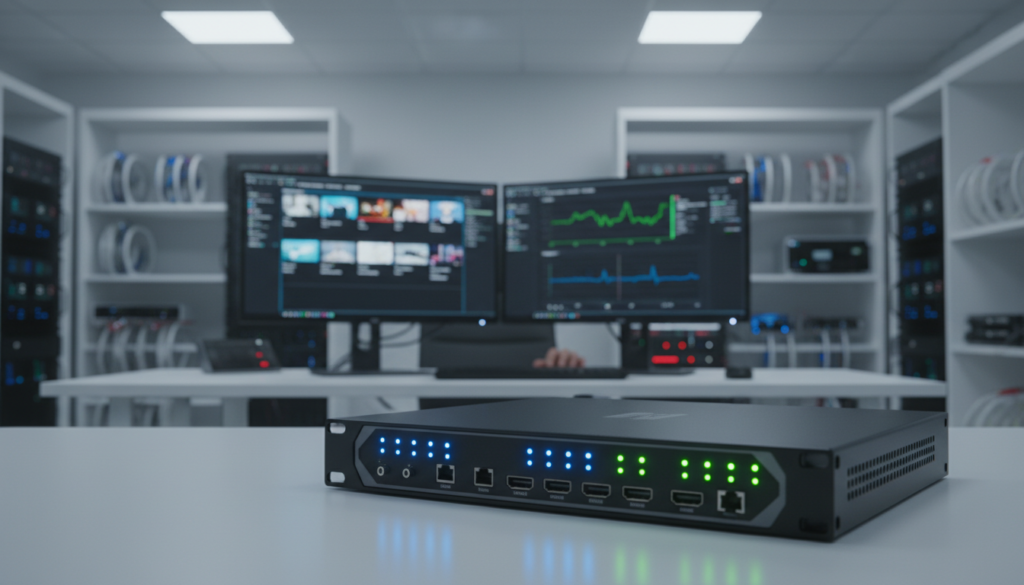
Are you having trouble streaming high-quality videos? You’re not alone. Finding the right equipment to convert video signals into digital formats is key.
An IPTV encoder is important. It turns HDMI sources into IP streams using H.264/H.265. This ensures great video quality and saves bandwidth.
Understanding how encoding works can also help users better evaluate IPTV services, including solutions offered by providers such as WCIPTV.
Key Takeaways
- IPTV encoders convert HDMI sources into IP streams for high-quality streaming.
- Advanced compression technologies reduce bandwidth usage.
- A professional IPTV encoder is vital for modern broadcasting.
- Key features to consider include compression technology and output quality.
- Choosing the right IPTV encoder can greatly improve your streaming.
Understanding IPTV Encoders and Their Function
The encoder is key in any IPTV system. It turns raw video into a format you can stream. Knowing how IPTV encoding device work helps you see their importance in live streaming.
What Is an IPTV Encoder?
An IPTV encoding device changes video signals into a digital format for internet streaming. It compresses the video to make it smaller but keeps the quality good. This lets you stream it on many devices.
The Signal Conversion Process
The encoder’s signal conversion has several steps. It first captures the video from a source, like a camera. Then, it converts the signal into digital form.
Next, it uses H.264 or H.265 to compress the digital signal. This makes the stream use less bandwidth. The compressed signal is then put into a transport stream for IP network streaming.

Common Input and Output Formats
IPTV encoders work with many input formats, like HDMI, SDI, and analog video. The outputs are usually H.264 and H.265, which are top choices for video compression. These formats help stream video efficiently without losing too much quality.
When picking an IPTV encoder, look at the input and output formats it supports. Make sure it fits with your current gear and streaming plans. This ensures a smooth streaming experience.
Key Technical Aspects of IPTV Encoders
Choosing the right high-quality IPTV encoder is key. It affects how well your IPTV service works. Look at several important technical factors.
Video Compression Standards (H.264 vs H.265)
Video compression is very important. It changes how good your streams look and how much bandwidth they use. H.264 and H.265 are the top choices.
H.264 has been the standard for a long time. It balances quality and compression well. But, H.265, or HEVC, is even better. It lets you stream higher quality video using less bandwidth.

According to technical explanations provided by Wikipedia’s overview of High Efficiency Video Coding, H.265 can deliver the same quality as H.264 at nearly half the bitrate. 👉 https://en.wikipedia.org/wiki/High_Efficiency_Video_Coding
Motion Estimation Algorithms
Motion estimation is key in video compression. It guesses where objects move. This guesswork helps save data, making compression better.
Good motion estimation algorithms make your IPTV encoder work better. This is true for videos with lots of movement.
Bitrate Optimization Techniques
Bitrate optimization is vital for smooth streams. It stops buffering and keeps quality high. You can use VBR or CBR encoding.
VBR changes bitrate based on content complexity. CBR keeps bitrate steady. Pick what works best for your vecaster IP video encoder and needs.
Transport Stream Packaging
Transport stream packaging is also key. It wraps your video and audio into a stream for IP networks. Good packaging means streams are delivered right and decoded well.
It also adds metadata and error correction. This makes the stream stronger.
In short, knowing about IPTV encoders is important. Look at compression, motion estimation, bitrate, and packaging. This helps pick the right encoder for your IPTV service.
Hardware vs Software IP video encoder Compared
Choosing an IP video encoder means deciding between hardware or software. Each has its own pros and cons. Knowing these helps you make a smart choice.
Hardware Encoder Capabilities and Limitations
Hardware media encoder device are made just for encoding video and audio. They are reliable and have low latency. This makes them great for live events and professional use.
- Advantages:
- They work well and use less power
- They are more secure because they’re made for one job
- Limitations:
- They cost more upfront
- They can’t change software easily
- You might need extra hardware for different formats
Software Encoder Flexibility and Performance
Software media encoder device run on regular computers. They are flexible and can grow. They can also change to support new formats easily.
- Advantages:
- They cost less to start, using what you already have
- They’re easy to update or change
- They work on many different computers
- Limitations:
- How well they work depends on your computer
- They might have more delay than hardware encoders
- They need strong computers for tough tasks

Hybrid Solutions for Maximum Efficiency
Many people choose a mix of hardware and software IPTV encoders. This way, you get the best of both. You use a hardware encoder for main tasks and software for extra needs.
When picking between hardware and software IPTV encoders, think about what you need. Look at the content you stream, your budget, and your tech skills. Whether you buy an IPTV encoder or rent one, knowing these details helps you choose wisely.
Top IPTV Encoder Features for 2026
As we look ahead to 2026, the need for top-notch media encoder device is growing. It’s key to know what makes an IPTV encoder great for smooth video streaming.
Video Quality and Resolution Support
Choosing the right IPTV encoder means looking at its video quality and resolution support. Today’s encoders can handle up to 4K and even 8K. This ensures your content looks its best.
Key resolution support includes:
- SD (Standard Definition)
- HD (High Definition)
- 4K (Ultra High Definition)
- 8K (Full Ultra High Definition)
A recent report says 4K and 8K will boost the IPTV encoder market. This is because more people want high-quality video.
“The future of IPTV encoding lies in its ability to support high-resolution content with minimal latency.”
Latency Considerations
Latency is very important in IPTV encoding. It affects how quickly video is delivered. Low latency is key for live broadcasts and interactive TV.
| Latency Level | Description | Typical Use Case |
|---|---|---|
| Low Latency | Less than 1 second delay | Live Sports, Interactive TV |
| Standard Latency | 1-5 seconds delay | Pre-recorded Content, VoD |
Multi-Channel Capabilities
Modern IPTV encoders can handle many channels at once. This is great for big broadcasting operations. It lets them encode several streams at the same time.
Adaptive Bitrate Streaming
Adaptive bitrate streaming changes video quality based on internet speed. This keeps playback smooth and reduces buffering. It makes for a better viewing experience.
The benefits of adaptive bitrate streaming include:
- Smooth playback across different network conditions
- Reduced buffering and interruptions
- Improved viewer satisfaction
With these advanced features, IPTV encoders in 2026 will offer top-notch streaming. They will deliver high-quality, seamless video experiences.
As explained by industry experts at TechRadar, adaptive streaming helps deliver consistent video performance across devices and varying internet speeds. 👉 https://www.techradar.com/news/what-is-adaptive-bitrate-streaming
IPTV Encoder Integration with Broadcasting Infrastructure
To get the most from your IPTV encoder, knowing how it works with broadcasting systems is key. A good setup means your live streams are smooth and your viewers get top-notch video.
Connecting with IPTV Servers
Linking your IPTV encoder to IPTV servers is a big step. This link lets the encoder send video to servers. Then, the servers share it on different platforms.
When picking anIPTV encoder for live streaming, check if it works with many IPTV server types. A high-quality IPTV encoder should handle various server protocols well. This makes sure your content gets to viewers smoothly.
For example, some encoders work with SRT or RTMP, common in live streaming. Make sure your encoder matches your server’s protocol for a reliable broadcast.
Stream Distribution Methods
How you spread your stream is important too. Your encoder should send streams to OTT services, mobiles, and TV. Adaptive bitrate streaming lets the encoder adjust quality for better viewing, no matter the internet.
Some encoders can send out many streams at once. This is great for reaching different audiences or showing content in different languages.
Scalability Options for Growing Networks
As your needs grow, your encoder should too. Look for encoders that can add more channels, improve stream quality, or connect to more servers. A scalableIPTV encoder for live streaming helps your system grow without needing a big change.
When choosing an IPTV encoder, think about its growth options. A scalable IPTV encoder is a smart choice. It lets you expand your broadcasts without spending a lot more.
Buyer’s Guide: How to Select the Best IPTV Encoder
Choosing an IPTV encoder is more than just picking a device. You need to think about several important factors. This ensures you find the right one for your needs.
Budget Considerations and Total Cost of Ownership
When you want to buy an IPTV encoder, your budget is key. But don’t just look at the price. Think about the total cost over time. This includes upkeep, energy use, and future upgrades.
Here’s a simple cost breakdown for IPTV encoders:
| Cost Component | Initial Cost | Ongoing Annual Cost |
|---|---|---|
| Hardware/Software | $1,000 – $5,000 | $0 – $1,000 |
| Maintenance | $0 | $500 – $2,000 |
| Energy Consumption | $0 | $100 – $500 |
Technical Support and Maintenance Requirements
Good technical support is key to keep your IPTV encoder running well. Look for makers that offer great support. This includes 24/7 help and regular updates.
Here’s what to check for in technical support:
- How reliable the support team is
- If there are good online resources and guides
- How fast they respond to questions and problems
Future-Proofing Your Investment
Technology changes fast, so you need to future-proof your choice. Pick an IPTV encoder that supports new standards and can grow with you. Look for ones with easy upgrades or support for new streaming types.
Compatibility with Existing Systems
Make sure the IPTV encoder works with your current setup. This means it fits with your content system, streaming servers, and other gear.
Check these things for compatibility:
- The types of inputs and outputs it supports
- If it works with your IPTV servers and streaming methods
- If it can grow with you in the future
By thinking about these points, you can find an affordable IPTV encoder that meets your needs now and in the future. Whether it’s a vecaster IPTV encoder or another brand, find the right balance for your needs.
Conclusion
Choosing the best iptv encoder is key for top-notch video content. Iptv encoders change video signals for streaming on the internet.
A professional iptv encoder has cool features like video compression and bitrate optimization. Look at video quality, latency, and multi-channel options. This ensures it fits your broadcasting needs.
The right iptv encoder boosts your streaming, making it reliable and efficient. Knowing the technical stuff helps you pick the best for your business.
Getting a top-notch iptv encoder is vital for staying ahead in streaming. Make sure to pick one that supports your growth and offers the best viewing experience.