Skip to content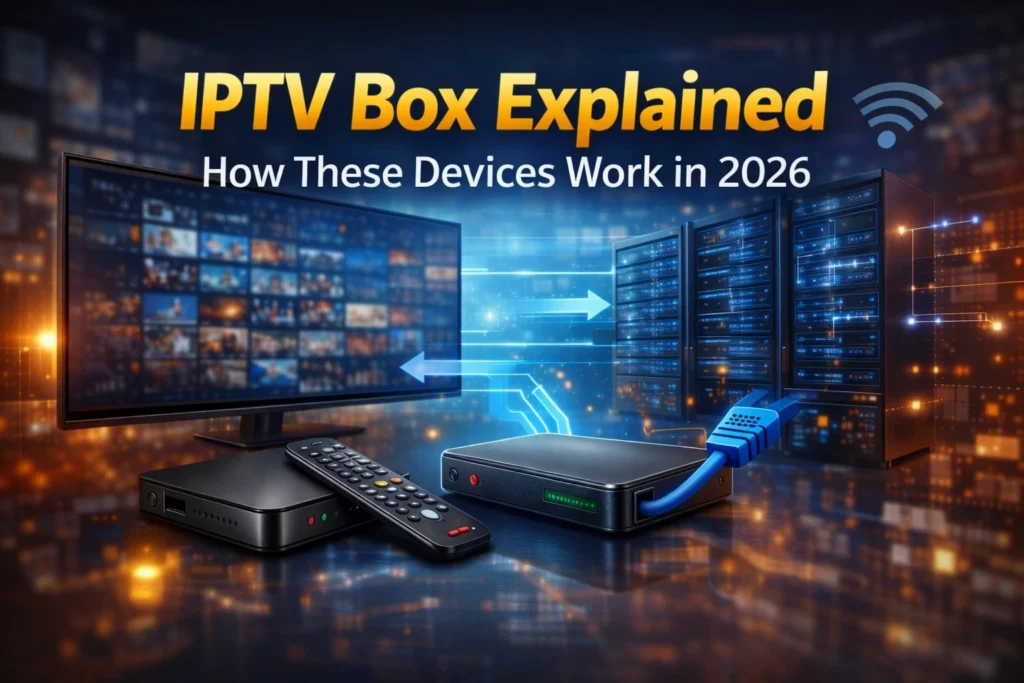
The way home entertainment systems operate continues to evolve in 2026, and the IPTV box has become an essential component in modern internet-based television environments. Rather than relying on traditional broadcast infrastructure, this type of device processes digital video signals delivered through IP networks.
Understanding how an IPTV box works, what role it plays in IPTV systems, and how it interacts with other components helps users evaluate solutions more effectively. For those who want to explore how IPTV environments are structured in practice, some platforms such as WCIPTV offer trial-based access that allows users to test system compatibility before making long-term decisions.
👉 WCIPTV trial page – 24 h
What Is an IPTV Box and How Does It Work?
An digital TV box is a digital device that connects to a television and decodes video signals delivered over the internet. Instead of processing satellite or cable signals, it receives compressed data streams and converts them into video and audio output using standard interfaces such as HDMI.
Inside an IPTV box, decoding hardware and software work together to process incoming data, manage buffering, and synchronize audio and video. This makes the device a key endpoint within a broader IPTV delivery system.
IPTV Box vs Traditional Cable Equipment

Traditional cable boxes depend on fixed broadcast infrastructure and regional distribution systems. In contrast, an digital TV box operates within flexible IP-based environments that rely on servers and network delivery rather than physical cabling.
Key differences include:
- Internet-based signal processing
- Device-level configuration
- Greater adaptability to different network setups
This shift explains why IPTV boxes are increasingly used as part of scalable digital television systems.
Why IPTV Boxes Are Popular in 2026
The growing use of IPTV boxes is driven by structural changes in how video content is delivered. Internet-based television systems allow for more efficient data handling and easier integration with modern digital platforms.
According to a technical overview published by Wikipedia, IPTV systems rely on packet-switched networks rather than traditional broadcast methods, allowing greater flexibility and scalability in video delivery.
👉 https://en.wikipedia.org/wiki/Internet_Protocol_television
This architecture has made IPTV boxes a practical choice within modern media environments.
Technical Features to Look for in an IPTV Box
When evaluating an IPTV box, technical specifications matter more than marketing claims. Important factors include:
- Video decoding standards
- Hardware stability and processing capability
- Network connectivity options
- Software and firmware support
These elements directly affect how well the device performs under different network conditions.
For a deeper technical explanation of how IPTV components work together, you can refer to our detailed guide on IPTV infrastructure and system architecture.
👉 What Is IPTV? The Ultimate Powerful Guide to Internet Protocol TV in 2026
the IPTV setup Compatibility and Device Integration
Modern IPTV boxes are designed to integrate with a wide range of systems. Most support standard HDMI output, Ethernet or Wi-Fi connectivity, and compatibility with IPTV applications and middleware platforms.
This flexibility allows the IPTV box to function as a universal endpoint within different IPTV setups, whether used in residential or small-scale commercial environments.
IPTV Box and IPTV Services: How They Work Together

An IPTV setup does not operate independently. It functions as one element within a complete IPTV ecosystem that includes encoders, servers, and management platforms.
In structured IPTV environments, service stability depends on how well devices interact with backend infrastructure. Some IPTV platforms, including WCIPTV, focus on optimizing system compatibility and server-side performance to ensure devices operate reliably within the network.
Things to Consider Before Choosing an IPTV Box
Before selecting any IPTV box, it is important to consider:
- Network speed and stability
- Device compatibility with IPTV servers
- Long-term software support
- Maintenance and updates
Evaluating these factors helps avoid performance limitations after deployment.
Industry analysis from Android Authority highlights how internet-based television solutions differ from traditional cable models in terms of flexibility and system control.
👉 https://www.androidauthority.com/cable-vs-streaming-3299040/
Conclusion
An IPTV device plays a critical role in modern internet-based television systems. Rather than replacing traditional broadcasting overnight, it represents a shift toward flexible, scalable, and network-driven video delivery models.
By understanding how an digital TV box works and how it integrates into full IPTV infrastructures, users can make informed decisions in 2026 based on technical compatibility rather than promotional messaging.
FAQ
What is an IPTV box used for?
It decodes internet-based video signals and outputs them to a television.
Does an IPTV box depend on internet quality?
Yes, stable network performance is essential for proper operation.
Can an digital TV box work with different IPTV services?
Most devices are designed to support multiple IPTV platforms.
Is andigital TV box future-proof?
That depends on hardware capability and ongoing software support.
Does an IPTV box replace traditional cable equipment?
It operates differently, using IP networks instead of broadcast infrastructure.